
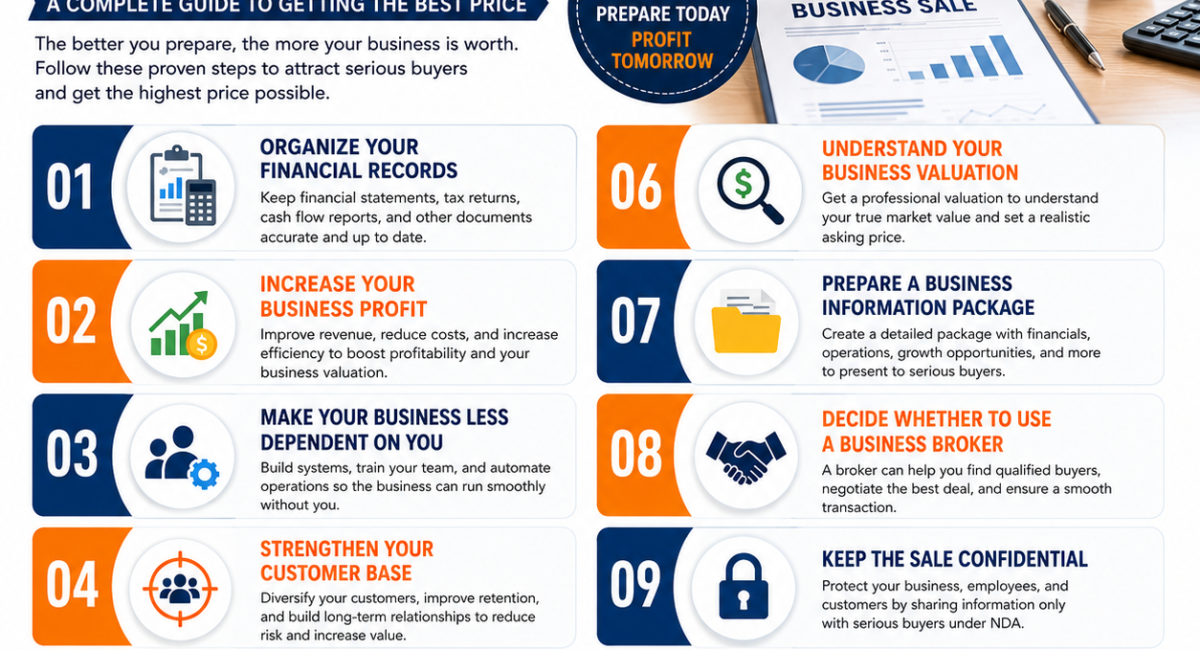
How to Prepare Your Business for Sale: A Complete Guide to Getting the Best Price
Selling a business is not something you should do overnight. The most successful business owners start preparing months—or even years—before putting their company on the market. Proper preparation can significantly increase your business valuation, attract serious buyers, and help you close the deal faster.
Whether you own an e-commerce business, retail store, manufacturing company, service business, or startup, these steps will help you prepare your company for a successful sale.
1. Organize Your Financial Records
One of the first things every potential buyer will examine is your financial history.
Make sure you have:
- Profit and loss statements for the past several years
- Balance sheets
- Tax records
- Revenue reports
- Expense breakdowns
- Cash flow statements
Transparent and well-organized finances create trust and can increase your chances of achieving a higher selling price.
SEO keywords: business financial records for sale, how to prepare financial documents for selling a company, business valuation.
2. Increase Your Business Profit Before Selling
A buyer is not purchasing your past—they are investing in your future potential.
Before selling your business, focus on improving:
- Monthly recurring revenue
- Profit margins
- Customer retention
- Operational efficiency
- Marketing performance
Even a small increase in annual profit can have a significant impact on your company valuation.
For example, if businesses in your industry sell for a 4x profit multiple, increasing yearly profit by $25,000 could potentially increase your selling price by around $100,000.
3. Make Your Business Less Dependent on You
Companies that rely completely on their owners are usually worth less.
Create systems that allow the business to operate independently:
- Document daily operations
- Train employees
- Automate repetitive tasks
- Build strong management structures
- Create clear supplier agreements
A business that can run smoothly without the owner is much more attractive to investors and buyers.
4. Review Your Customer Base
Buyers want to see a stable and diversified customer base.
If one client generates 70–80% of your revenue, this can be considered a risk.
Improve your business by:
- Increasing repeat customers
- Expanding to new markets
- Building an email database
- Strengthening your brand reputation
- Improving online visibility
A loyal customer base often increases the perceived value of a company.
5. Improve Your Online Presence
Today, many buyers research a company online before making an offer.
Before listing your business for sale, improve:
- Your website design and speed
- Search engine rankings (SEO)
- Customer reviews
- Social media profiles
- Google Business Profile
- Brand reputation
A strong digital presence can make your business more attractive and demonstrate future growth potential.
6. Understand Your Business Valuation
Many owners overestimate or underestimate the value of their company.
A professional business valuation considers factors such as:
- Revenue
- Profitability
- Industry trends
- Growth potential
- Assets
- Brand value
- Customer relationships
Understanding your realistic market value helps you negotiate confidently with potential buyers.
7. Prepare a Business Information Package
Serious buyers expect detailed information before making an offer.
Create a professional package including:
- Business overview
- History of the company
- Products and services
- Financial performance
- Growth opportunities
- Team structure
- Operational details
A well-prepared business presentation can speed up negotiations and build buyer confidence.
8. Decide Whether to Sell Yourself or Use a Business Broker
You can sell a business independently or work with a business broker.
A broker can help with:
- Finding qualified buyers
- Negotiating the best price
- Maintaining confidentiality
- Managing the sale process
However, selling privately can help you save commission fees.
Choose the option that best matches the size and complexity of your business.
9. Keep the Sale Confidential
Announcing that your business is for sale too early can create uncertainty among employees, customers, and suppliers.
Use confidentiality agreements (NDAs) when sharing sensitive information with potential buyers.
A discreet sale process protects your business stability and ensures a smoother transition.
10. Plan Your Life After Selling
Many entrepreneurs focus only on the transaction and forget to plan what comes next.
Ask yourself:
- Will you start another business?
- Will you retire?
- Will you invest your money?
- Will you work as a consultant during the transition?
Having a clear plan after the sale will make the transition easier and more rewarding.
Final Thoughts: The Better You Prepare, the More Your Business Is Worth
Preparing your company for sale is one of the smartest investments a business owner can make. The best time to start preparing is long before you actually decide to sell.
By improving profitability, organizing your financial records, building strong systems, and increasing your company’s independence, you can attract more buyers and maximize your business selling price.
If you are thinking, “How can I sell my business for the highest price?”, the answer is simple: start preparing today.